%20(Transparent%20Background%20(2).png)


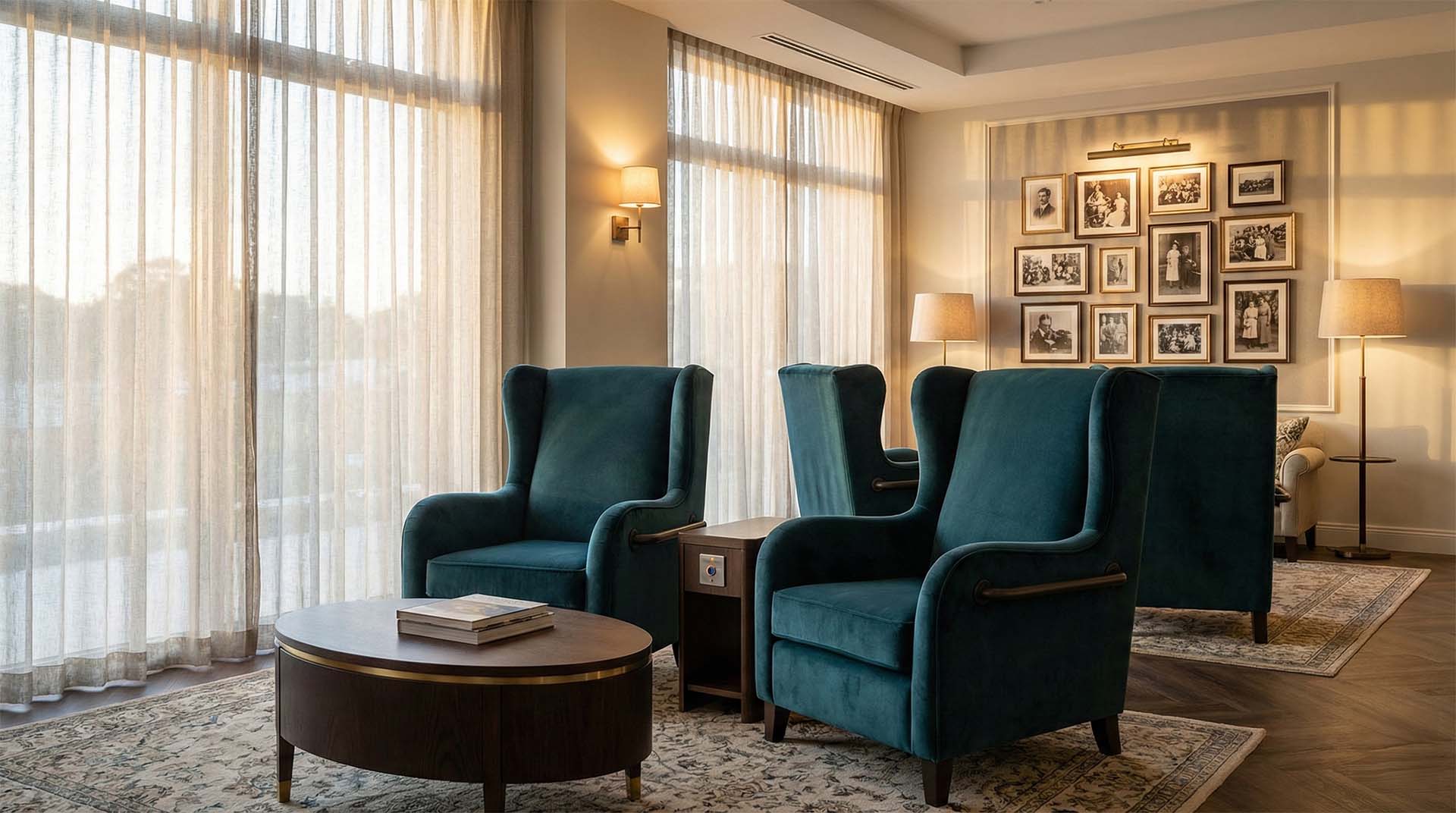

In the competitive world of social care, the "look and feel" of a facility is often the deciding factor for families. But for investors and operators, care home interior design is about much more than curb appeal. It is a strategic asset that directly impacts your ROI
In the competitive world of social care, the "look and feel" of a facility is often the deciding factor for families. But for investors and operators, care home interior design is about much more than curb appeal. It is a strategic asset that directly impacts your Return on Investment (ROI).
A well-designed environment reduces falls, calms residents with dementia, and—crucially—improves staff efficiency.
At RDS CareBuild, we bridge the gap between clinical necessity and luxury living. Here is why hiring a specialist care home design team is one of the smartest financial decisions you can make for your development.
1. The "Hospitality vs. Care" Trap
A common mistake developers make is hiring standard hotel interior designers to create a "5-star" look. While the results may be visually stunning, they often fail functionally.
Care home interior design requires a specific scientific approach that general designers lack:
- Fabric Durability: Can the beautiful velvet armchair withstand daily chemical cleaning and incontinence? If not, you will be replacing it in six months (a hidden OpEx cost).
- Contrast & Visibility: A monochrome grey palette might be trendy in a boutique hotel, but for an elderly resident with failing eyesight, it makes furniture blend into the floor, increasing the risk of trips and falls.
- Acoustics: Hotels are designed for privacy; care homes need social interaction but must dampen the noise of call bells and trolleys to prevent sensory overload.
The ROI Impact: Specialist design reduces your replacement costs (CapEx) and lowers your liability insurance risk by designing out hazards.
2. Designing for Dementia: The Occupancy Driver
The demand for specialist dementia care is skyrocketing. If your facility is designed purely for "frail elderly" rather than cognitive support, you are limiting your market share.
Specialist dementia-friendly interior design involves nuanced details that boost occupancy rates:
- Wayfinding: Using color-coded corridors and "memory boxes" at bedroom doors to help residents navigate independently, reducing anxiety and aggression.
- Light Reflectance Values (LRV): We ensure a 30-point contrast between floors and walls. Why? Because to a dementia patient, a dark rug on a light floor can look like a hole in the ground, causing them to freeze or fall.
- Nostalgic Nodes: Creating "destinations" within the home (like a 1960s-style potting shed or a vintage post office) that encourage activity and reduce wandering.
The ROI Impact: Facilities with accredited dementia-friendly design features command higher weekly fees and see lower resident turnover.
3. Staff Retention Through Design
Your biggest operational cost is staff. In a sector facing a recruitment crisis, your building needs to work for your team, not against them.
We design back-of-house areas with the same care as front-of-house:
- Efficient Layouts: Reducing the walking distance between nurses' stations and sluice rooms saves hours of staff time per week.
- Staff Wellbeing Zones: Providing high-quality break rooms and changing facilities tells your staff they are valued.
- Storage Solutions: "Hidden" storage in corridors for hoists and linen trolleys keeps the home tidy and reduces staff frustration.
The ROI Impact: A better working environment reduces burnout and agency staff spend.
4. Serving the Whole UK Market
Whether you are developing a luxury flagship in the capital or a community-focused home in the North, the principles of good design remain the same.
At RDS CareBuild, our design teams operate nationwide, understanding the nuances of local markets:
- Care home interior designers in London often need to maximize space in smaller footprints, using clever joinery to create multi-functional rooms.
- Projects in Manchester, Birmingham, and Leeds often focus on large-scale refurbishments of existing Victorian or industrial buildings, requiring a blend of heritage preservation and modern care standards.
- Regional Hubs: From Bristol to Newcastle, and Liverpool to Southampton, we tailor our aesthetic to the local demographic—making residents feel truly "at home" in their specific region.
5. Future-Proofing Your Asset
The CQC is placing increasing emphasis on the "physical environment." A facility designed today must meet the standards of 2030.
This includes integrating technology seamlessly into the interior design. We design for:
- Acoustic Monitoring: Integrating sensors into ceilings so they are unobtrusive.
- Smart Lighting: Systems that mimic natural daylight cycles (circadian lighting) to improve resident sleep—and reduced night-time wandering means less pressure on night staff.
Conclusion: Design is an Investment, Not a Cost
If you view care home interior design as merely "picking curtains," you are leaving money on the table. Good design fills beds, keeps staff happy, and keeps the CQC satisfied.
At RDS CareBuild, our in-house design team works alongside our construction experts to deliver a cohesive vision—from the first brick to the final cushion.
Looking to transform your care environment? Whether you need a full interior fit-out in Sheffield or a refurbishment in Nottingham, contact RDS CareBuild today.